

Hollow flat rails and angle profiles - precision and protection for architecture and trade
Hollow flat rails and angle profiles made of aluminium for precise transitions and edge protection. Anodised, in 5m lengths, perforated or cut to size on request - ideal for architects and tradespeople.
Functional profiles for professional applications
Our hollow flat rails and angle profiles made of high-quality aluminium are the ideal solution for architects, interior designers and craftsmen who value precision, durability and aesthetics. They ensure clean transitions, stable finishes and durable edge protection - both in modern interior design and in commercial or industrial projects.
With their wide range of applications, hollow flat rails and angled profiles compensate for height differences, protect sensitive edges and give rooms or building elements a high-quality finish. Thanks to the lightweight but robust aluminium, they are easy and safe to install, either by screwing or gluing, and therefore offer maximum flexibility during installation.
Customisation and high-quality design
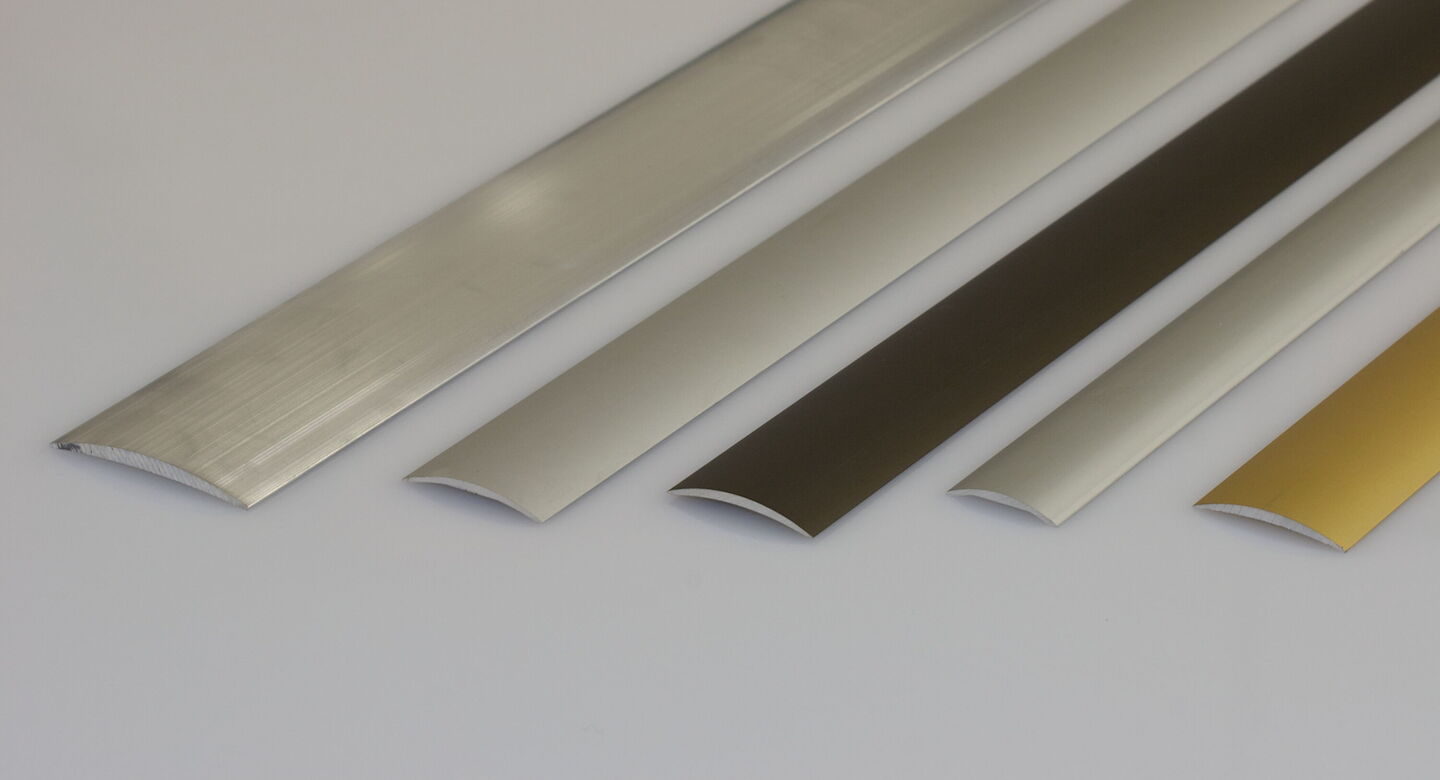
For demanding projects, we supply our hollow flat rails and angle profiles from stock in 5 metre lengths - perfect for series production or larger construction projects. The profiles are available in various surface finishes: bright, natural anodised, brown anodised or gold anodised. This allows them to blend harmoniously into any architectural colour and material concept.
On request, the profiles are also available perforated for LK screws (Ø 3.5 mm), which enables quick and secure fastening. We also offer customised cuts for individual requirements - ideal for special constructions or customised detail solutions.
With our hollow flat rails and angle profiles, you get durable, technically sophisticated and aesthetically pleasing components that fulfil both the design requirements of architects and the practical requirements of the trade.